Scientific Research Network

Shaping sustainable 6G through Belgian research excellence.

6GBRAINS brings together Belgium’s telecommunications expertise, wireless testbeds and research facilities to advance the technologies and talent behind the next generation of networks.

About the network

A Belgian alliance for innovative 6G

With 6G deployment anticipated around 2030, the network’s timeframe aligns directly with the development of the next generation of wireless communication systems. 6GBRAINS—the 6G Belgian Research Alliance for Innovative Solutions—connects Belgium’s distributed telecommunications expertise, including research centres at the forefront of wireless technology and leading testbeds and research facilities.

By combining the strengths of its partner institutions, the network advances research and education, reinforces Belgium’s position in wireless innovation, and increases its impact at Belgian, European and international levels.

Scientific targets

Research focus

6GBRAINS contributes to the engineering research needed to meet future 6G performance requirements across five connected areas.

  1. 01 High-performance communications
  2. 02 Internet of Things
  3. 03 Joint communication, localization and sensing
  4. 04 Future radio-access-network technologies and architectures
  5. 05 End-to-end networking

Designed for long-term impact

Sustainability at the core

Beyond technological progress, 6GBRAINS places sustainability at the heart of the research process. Future networks must be considered across three connected dimensions.

  • Environmental
  • Economic
  • Societal

The network promotes multi- and interdisciplinary collaboration with Belgian and international experts to address the challenges and opportunities of sustainable 6G.

Events & activities

Meet the network

Exchange ideas, share research and help shape the future of 6G.

Second 6GBRAINS event · Registration open

Study day: Practical 6G

Tuesday, 1 December 2026 Digital Future Lab (UHasselt)

Join the 6GBRAINS network for a study day on “Practical 6G”, with keynotes, research talks and time for networking. Registration is now open. Please complete the registration form before and share the registration link within your teams.

Register for Practical 6G

Programme

Subject to change. Check this page for the latest updates.

  1. – Registration and coffee
  2. – Welcome and introduction
  3. – Keynote: 5G towards 6G within the NATO Wireless Standardisation Project Prof. dr. Mathias Becquaert · Royal Military Academy
  4. – Keynote: AI/ML in 6G RAN Dr. Spyridon Louvros · MCNS, 3GPP technical consultant, TEI of Western Greece
  5. – Sandwich lunch
  6. – Session 1 Wireless sensing and device identification Prof. dr. Rafael Berkvens · UAntwerpen Making sense, 6G? 6G from the MNO perspective Drs. Tom Collins · Citymesh, UGent
  7. – Coffee break
  8. – Session 2 Topic 1: TBD Topic 2: TBD
  9. – Closing remarks
  10. From Networking and coffee

Past event

First 6GBRAINS Symposium

Tuesday, 6 October 2026 KU Leuven Ghent Campus, Cafeteria Zone 3

Researchers from across the 6GBRAINS network are invited to meet, share their work and exchange feedback. The day combines invited keynotes, poster presentations and time for discussion and networking.

Programme

  1. – Welcome coffee
  2. – IntroductionDRAMCO
  3. – Keynote 1 Sébastien Rumley · HES-SO / HEIA-FR · Online All LCA models are wrong. Are some of them useful? Towards open computational LCA, with a use case on multi-level eco-design of a power module.
  4. – Keynote 2 Thibault Pirson · UCLouvain How far is the digital industry from absolute environmental sustainability? Historical trends and perspectives in a fast-evolving future.
  5. – Poster pitches30 seconds per poster
  6. – Lunch break
  7. – Poster session
  8. – Keynote 3 François Rottenberg · KU Leuven DRAMCO Moving from 4G to 5G and then to 6G: evolving challenges & opportunities for energy saving in radio access networks.
  9. – Coffee break
  10. – Keynote 4 Laurent-Walter Goix · Nokia Beyond Faster: Making 6G Intelligent, Resilient and Sustainable by Design
  11. – Discussion on next meetings, networking & closure

Morning session chair: Jérôme Louveaux. Afternoon session chair: Pieter Robyns.

Posters

Meet the presenters during the poster session, 13:30–14:15. Each poster has a 30-second pitch during the 11:45–12:00 session before lunch.

  1. User-Centric Wireless Networks and Urban Co-Creation

    Viktoriya Postulga, Joris Putteneers, Gilles Callebaut

  2. Diversity and multiplexing modeling for industrial massive MIMO channels

    Yunqi Feng, Wout Joseph, Emmeric Tanghe

  3. Low Latency EKF-Based Indoor Tracking via Asynchronous Fusion of TDMA Ultrasonic Ranging and IMU Measurements

    Sogand Hashemi, Daan Delabie, Lieven De Strycker, François Rottenberg

  4. Procedural Modeling as a Methodological Layer for Ray-Tracing-Based Electromagnetic Simulations

    Felipe Oliveira Ribas, Gunter Vermeeren, David Plets, Wout Joseph

  5. EIRP-Based Simulation and Experimental EMF Exposure Assessment of 5G MaMIMO

    Javad Heidari, Wout Joseph, Luc Martens, Günter Vermeeren

  6. uLEDMapper: Low-Cost Hospital Asset Tracking with Opportunistic Unmodulated Visible-Light Positioning

    Morteza Alijani, Cedric De Cock, Wout Joseph, David Plets

  7. Newtonized Orthogonal Matching Pursuit with Variable Projection for OTFS Sensing

    Kaixin Chang, Morteza Rajabzadeh Oghaz, Nele Noels, Heidi Steendam

Invited keynote speakers

Portrait of Sébastien Rumley

Keynote 1

Sébastien Rumley

– · Online

HES-SO / HEIA-FR · iCoSys · Fribourg, Switzerland

All LCA models are wrong. Are some of them useful? Towards open computational LCA, with a use case on multi-level eco-design of a power module.

Read abstract

Life Cycle Assessment (LCA) is now used to quantify and regulate the environmental impacts of electronics and ICT. Because biosphere flows can rarely be measured directly, these assessments rest on models, and, for complex products, on systems of models. This talk argues that such systems demand extra care in construction, calibration, integration, and interpretation, and outlines a few solutions.

We will first revisit the argument of [1]: ICT LCA is a modeling activity subject to two curses (validation is hard; models must be composed), illustrated by structural issues such as database sensitivity, scope mismatches, opaque aggregation, and models that cannot be integrated or maintained. This analysis suggests four requirements for credible model-based LCA: (R1) explicit lineage, (R2) clearly defined scope, (R3) end-to-end traceability, and (R4) managed non-obsolescence. A proposed computational response is to represent models as an explicit dependency graph, to host them in an open versioned repository, to enforce integrity constraints automatically, and to adopt a well-defined model taxonomy.

We will then present ElecImpact [3, 4], the GDR DEFIE initiative which tries to operationalize these requirements in an open and collaborative manner. It aims to be a platform that is both a database and the code that manipulates it. The code is designed to be modular: a small domain-agnostic core can be extended by opt-in parsers and data models proposed by anyone. Inventories are a typed graph of products, processes, and models. Amounts can be symbolic formulas in a reusable formula graph rather than fixed numbers. Datasets authored by different actors can be merged into one connected super-graph. Scenarios (i.e., sets of numerical values) are applied in a vectorized manner on top of the graph. The platform aims to version both data and code, and complements existing tools (e.g., Brightway) rather than replacing them.

Finally, we will illustrate the two previous parts with a use case on eco-design of a power module [2]. Inventories owned by different stakeholders are merged into one model, coupled by formulas, and explored through a set of scenarios, showing how the ElecImpact platform applies to a real multi-level product. Sharing the results via the ElecImpact data structure then improves on requirements (R1)–(R4).

References and links
  1. V. Corlay et al., “All LCA models are wrong. Are some of them useful? Towards open computational LCA in ICT,” Sustainable Computing Workshop 2026.
  2. V. Corlay and P.-Y. Pichon, “A multi-level parametric life-cycle inventory data structure for eco-design space exploration: application to an IGBT power module” (in preparation).
  3. ElecImpact documentation
  4. ElecImpact source code
Read biography

Sébastien Rumley is an Associate Professor at the School of Engineering and Architecture of Fribourg (HEIA-FR), HES-SO, and a member of the iCoSys Institute. He holds an MSc and a PhD from EPFL and previously worked at Columbia University and Olympe.io. His teaching covers software engineering, computer engineering, and IT infrastructure monitoring and benchmarking. His research interests include cloud computing monitoring and optimisation, green and sustainable computing, and digital twins for smart buildings.

Sébastien Rumley’s profile at iCoSys

Portrait of Thibault Pirson

Keynote 2

Thibault Pirson

–

UCLouvain · Louvain-la-Neuve, Belgium

How far is the digital industry from absolute environmental sustainability? Historical trends and perspectives in a fast-evolving future.

Read abstract

The digital industry is receiving growing attention in our societies. In fact, digital goods and services are increasingly integrated into everyday life, while being at the same time increasingly scrutinized for their associated environmental burdens. The first part of the talk will provide an overview of the environmental footprint of the digital industry (with a focus on greenhouse gas emissions) and introduce the fundamentals of absolute environmental sustainability assessment (AESA). This will allow attendees to understand how the AESA methodology supports a paradigm shift from “better” to “sufficient,” compared to life cycle assessment (LCA) and other environmental accounting methods. The second part will present results from applying AESA to the digital industry, illustrating the sector’s distance from absolute environmental sustainability. This will highlight the industry’s dynamics over the past 25+ years and illustrate the use of the recently released open-source Python package pyaesa, equipping attendees with practical AESA tools and workflows. The final part of the talk will focus on prospective analysis, offering perspectives for the upcoming years. It will highlight key challenges in the digital sector from an AESA standpoint, particularly given the sector’s rapid evolution further exacerbated by the global rise of generative AI.

Read biography

Thibault Pirson was born in Morges, Switzerland in 1996. He received his M.Sc. and Ph.D. degrees in electrical engineering from Université catholique de Louvain (UCLouvain) in 2019 and 2023 respectively. In 2024, he received the Best Master Thesis Award from the ICTEAM institute for his PhD focusing on life cycle assessment (LCA) of Internet-of-Things (IoT) electronic devices. After one year of travel in Europe, he started a post-doc position at UCLouvain and applied absolute environmental sustainability assessment to the digital and semiconductor industries. He also went on exchange at Melbourne University (Australia), did an internship at the Observatoire Astronomique de l’Université de Genève, and went for a short research stay in the Department of Environmental and Resource Engineering Quantitative Sustainability Assessment (QSA) at the Technical University of Denmark (DTU). Thibault also co-founded and organized with other researchers the sustainable ICT (SICT) doctoral school, which questions the sustainability of ICT from inter- and transdisciplinary perspectives. Besides his academic research, he also took part in non-academic reports focusing on the environmental impacts of the digital industry.

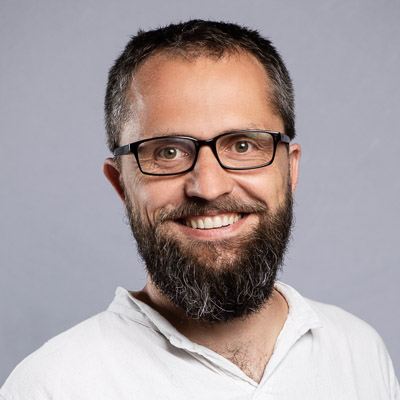
Portrait of François Rottenberg

Keynote 3

François Rottenberg

–

KU Leuven DRAMCO · Ghent, Belgium

Moving from 4G to 5G and then to 6G: evolving challenges & opportunities for energy saving in radio access networks.

Read abstract

This talk will address the evolution of energy saving techniques in radio access networks and in particular how each generation came with new challenges and opportunities. It will start by reviewing the power consumption in legacy 4G systems and then looking at 5G systems, which were conceived to be “ultra-lean” from the start. Based on numbers and measurements obtained from 4G & 5G deployments in Belgium, this talk will show how this was translated in reality. It will also show that the power breakdown among different components of a base station has drastically evolved. Remarkably, the shares of analog and digital signal processing blocks have gained significance importance across the generations and as compared to the power amplifier, which was the main driver in 4G. In line, energy-saving techniques should be carefully designed to see how and when to deactivate components in the time, frequency, space and power domains, as a function of the load of the network. Looking forward, 6G is willing to approach the zero power at zero load. The end of the talk proposes a prospective power consumption model of 6G FR3 systems showing, again, where are the challenges and opportunities to (hopefully) reach this promise.

Read biography

François Rottenberg received the M.Sc. in Electrical Engineering from the Université catholique de Louvain (UCLouvain), Louvain-la-Neuve, in 2014, and the Ph.D. degree jointly from UCLouvain and Université libre de Bruxelles (ULB), Brussels, in 2018. From 2018 to 2019, he was a postdoctoral researcher with the University of Southern California (USC), Los Angeles. From 2019 to 2021, he was a postdoctoral researcher with UCLouvain and ULB, funded by the Belgian National Science Foundation (FRS-FNRS). He is now an associate professor at the Katholieke Universiteit Leuven (KU Leuven). He has been a regular visitor and collaborator of the Centre Tecnològic Telecomunicacions Catalunya (CTTC), Spain and the National Institute of Information and Communications Technology (NICT), Japan. He was secretary, vice-chair and is now the chair of the IEEE Benelux Section. He is also an associate editor of the IEEE Transactions on Green Communications and Networking and a member of the Center for Affordable and Sustainable Technologies (CAST). His main research interests are in signal processing and machine learning for sustainable communications techniques.

Portrait of Laurent-Walter Goix

Keynote 4

Laurent-Walter Goix

–

Nokia

Beyond Faster: Making 6G Intelligent, Resilient and Sustainable by Design

Read abstract

6G is often introduced through higher performance, native AI and new capabilities beyond connectivity. Yet its lasting impact will depend on a more fundamental question: can we design a network generation that is intelligent, resilient and sustainable from the outset, rather than attempting to correct its impacts after deployment?

This keynote will examine how sustainability can move from a broad ambition to concrete technology choices and globally interoperable standards. It will distinguish between making the 6G system itself more sustainable and having 6G enable positive environmental, societal and economic outcomes in other sectors. Drawing on current work in 3GPP, Nokia and the European SUSTAIN-6G project, the presentation will discuss the main principles and proper methodology of a holistic approach to ensure responsible design, development and use of technology.

Particular attention will be given to the role and scope of standardization within this process: which sustainability “key values” and challenges require common requirements, interfaces, measurements or procedures, and which should remain matters of implementation, regulation or policy? After a reality check from the 3GPP perspective, the keynote will conclude with open research and standardization questions for the 6G community, as an invitation to help turn “sustainability by design” into an engineering discipline.

Read biography

Laurent-Walter is a Senior Standardisation Specialist at Nokia Standards acting as 3GPP SA1 delegate covering sustainability-related topics, as well as IMS, computing and AI services. He has led some 5G-Advanced work on Energy-related topics and has been driving the introduction of sustainability in 6G in SA1 such as Key Values and aspects related to social sustainability. He's also actively involved in this topic both within Nokia and in EU's SUSTAIN-6G lighthouse project on sustainability.

The network

Partners

Network leadership

Scientific lead

Liesbet Van der Perre

Scientific coordinator

François Rottenberg

University partners in the 6GBRAINS network.

KU Leuven Ghent University University of Antwerp UCLouvain UHasselt Université libre de Bruxelles UMONS Vrije Universiteit Brussel

Get in touch

Contact

Interested in research collaboration or learning more about the network? Get in touch and we will connect you with the right partner.

info@6gbrains.be Research collaboration • Interdisciplinary exchange • 6G education